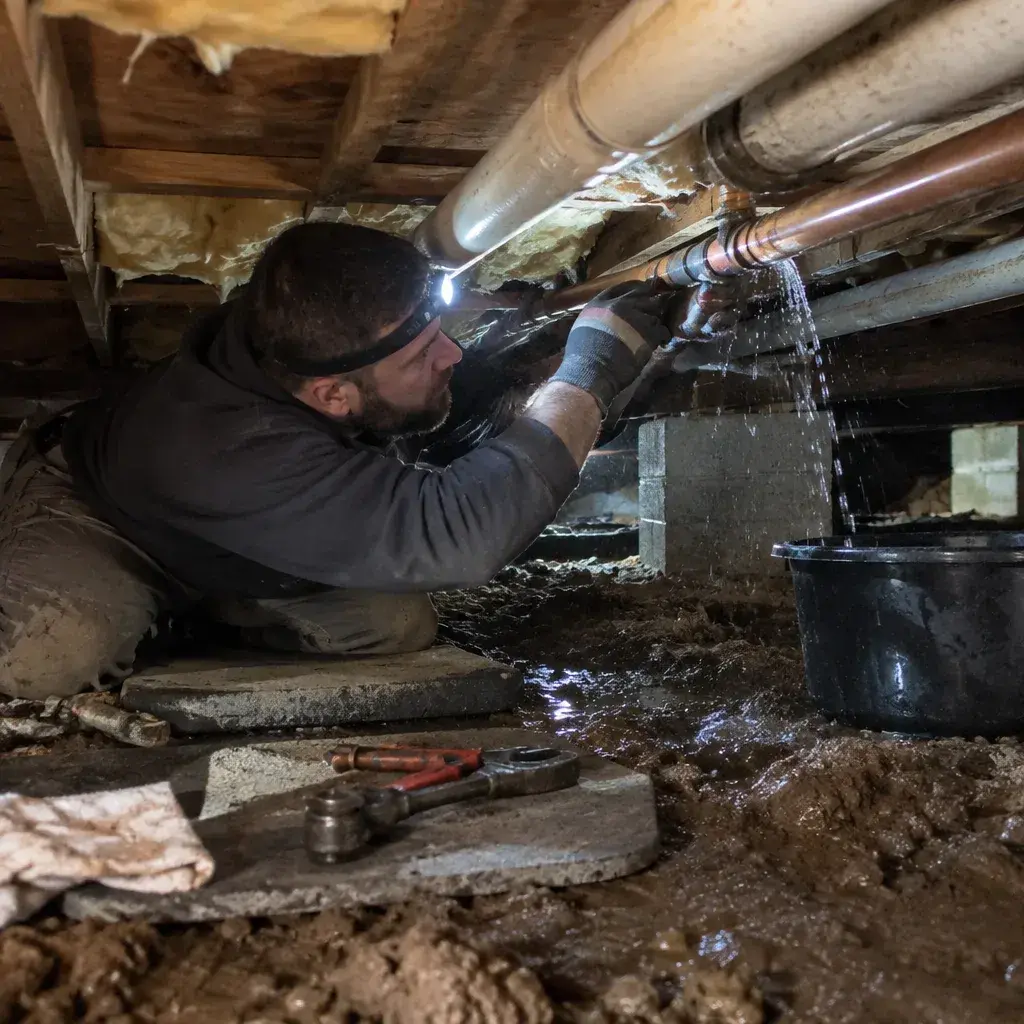
How Cold Can Strain Water Lines
A repeat leak can also leave moisture around nearby finishes, giving the licensed pros we connect you with another sign to check. A leak’s timing and location help the plumber decide whether cold exposure belongs on the list of possibilities.
Homes around Lake Ethel and Harward Recreation Center do not all have the same pipe layout or materials. The plumber needs the property’s own repair history and visible conditions; local housing patterns alone cannot identify why a line failed.
Calls span Nampa and the wider Canyon area, but a city name or ZIP alone cannot settle coverage. Give the pros we connect you with the property’s street address and ask them to verify service for that location.
Safe Water Shutoff
- FAILURE PATTERN
- A dated list of leak locations helps show whether failures follow one supply route or appear in unrelated parts of the home.
- PIPE CONDITION
- Operating pressure readings give the plumber a system condition to compare with the pipe’s limits and previous inspection notes.
- LINE PRESSURE
- Pipe material, size, and connection style help identify whether earlier work and the existing line are compatible.
- PIPE MOVEMENT
- A pipe that moves or vibrates during ordinary use may provide a clue when the plumber compares recurring failures.
- REPAIR HISTORY
- Photos and prior repair records preserve details that may no longer be visible after a leak dries or access is closed.
- BREAK LOCATION
- Treasure Valley winters bring cold spells that can affect pipes in exposed or unheated spaces. When a leak returns during colder weather, record the timing and location so the plumber can compare it with earlier failures.
- PIPE ACCESS
- an estimated $125–$500
What Happens After the Line Is Fixed
Drain leak. Both can leave damp cabinets or flooring, but a drain leak is tied to used water leaving a fixture, while a supply-line leak comes from the incoming pressurized pipe. A drain leak usually appears when a sink, tub, or appliance releases used water; a supply leak can continue while the line is pressurized. The plumber can compare when moisture appears with fixture use and inspect the pipe serving that spot.
Safe Shutoff Before Pipe Work
The plumber reviews prior repair notes, maps each leak location, and traces the supply route through accessible areas. They inspect visible pipe, joints, and supports, then compare material and condition across the affected runs. Pressure and vibration checks can help identify a shared condition behind separate failures.
With the pattern documented, the plumber explains whether the evidence points to one section or a wider supply-line concern. Any proposed work depends on pipe material, access, and surrounding condition. After work, the repaired section is checked for leaks under pressure before concealed areas are closed.
If a burst follows a cold spell, repairing the failed section may be all the plumbing work needed. Ask the plumber to assess accessible nearby pipe for signs of damage; consider ongoing checks only if that assessment gives you a specific reason.
ONE DAMAGED-PIPE FIX OR RECURRING PLUMBING REVIEW
| Leak Check |
How the Line Is Fixed |
|---|
| A fresh split, caught promptly | Leak and flow check |
| Leak returns at a previously repaired pipe | damaged section repair |
| Damage spread across multiple parts of the line | Section replacement and flow check |
Note the Pipe and Leak
You can safely gather photos, dates, room locations, and details from earlier repair paperwork without opening walls or handling wet pipework. Keep clear of any wet space with an electrical hazard. Leave pressure checks, tracing concealed lines, and pipe assessment to a plumber; your notes help the pros we connect you with compare events.
Keeping Clear of Wet Work Areas
A recurring leak is more than a nuisance when water reaches outlets, appliances, or other electrical equipment. Keep people out of a wet area where electrical hazards may be present, and do not handle wet devices. In Nampa, note which rooms became damp and whether the condition returned after earlier work; that history helps the plumber assess where the supply line needs inspection.
Why Can Repair Costs Vary?
Ask the plumber to identify the break, match parts to the existing line, and include material and access in the estimate.The guide shown as $350–$1,300 covers locating and repairing the damaged supply pipe, with the amount shaped by pipe material, access, and how much must be replaced. It leaves out water extraction, drying, and rebuilding. For your Nampa home, the pros we connect you with can confirm any visit charge and the exact repair scope when you call.The pricing guide lays out complete price bands and cost factors, while Burst Pipe Location covers the repair approach for this work.