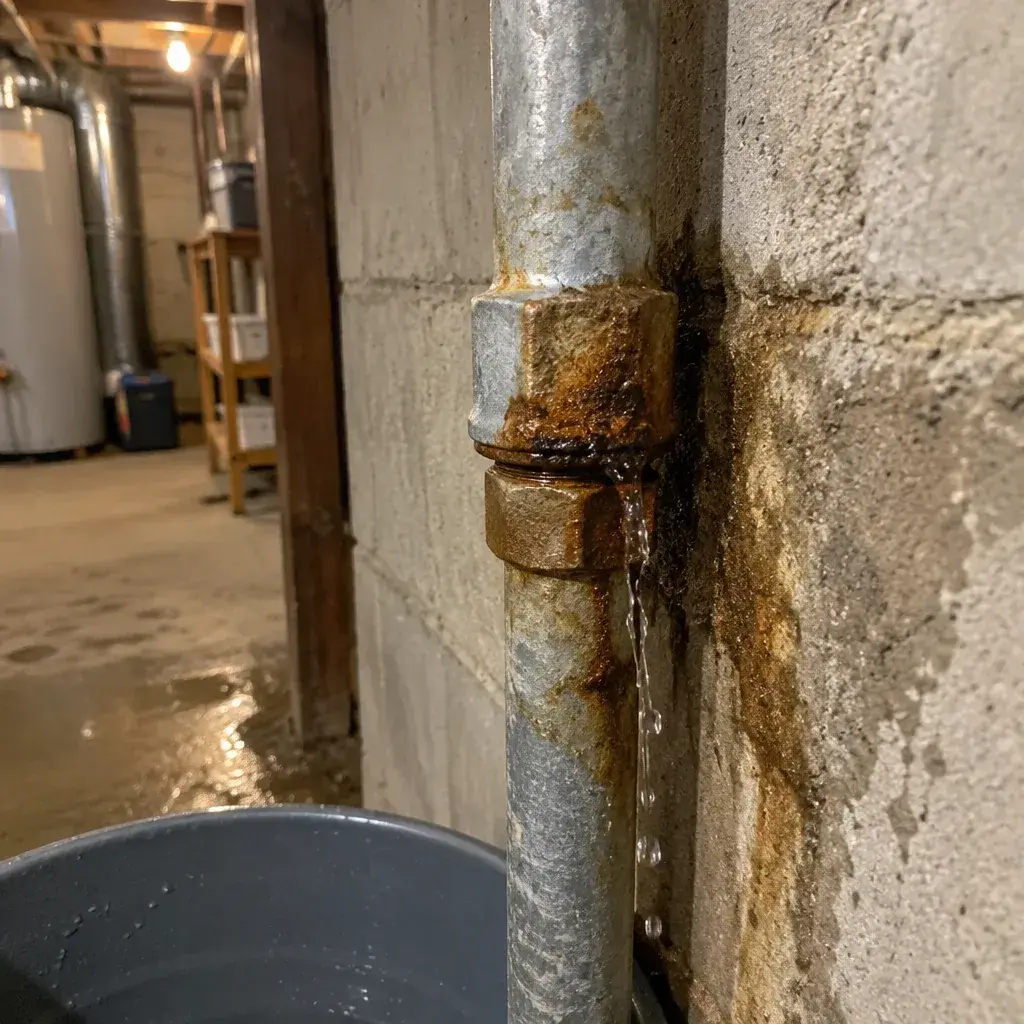
How Cold Can Strain Water Lines
Nampa’s local water landmarks don’t identify the cause inside a house: Lakeview Park’s irrigation connection to Mason Creek and Lake Ethel describe park water features, not household supply piping. For a galvanized line, its route through a cold or sheltered space and the metal’s condition at the break are more useful clues than nearby landmarks.
Nampa, Meridian, and Caldwell are all within the regional service area, but no verified data here establishes local pipe materials, housing age, or burst rates. The actual pipe condition and exposure at the home are what guide the repair decision.
Calls span Nampa and the wider Canyon area, but a city name or ZIP alone cannot settle coverage. Give the pros we connect you with the property’s street address and ask them to verify service for that location.
Safe Water Shutoff
- DAMAGE
- Galvanized steel can corrode internally, so the visible split may not show the full condition of the surrounding pipe.
- MATERIAL
- A localized repair depends on whether sound pipe remains where compatible fittings can make secure connections.
- REPAIR
- Copper, PEX, and CPVC require fittings and joining methods suited to each material and the existing line.
- ACCESS
- A repair must address the damaged section of the supply line.
- CHECK
- A wet patch appeared after a galvanized pipe burst in Nampa; from Lakeview Park to Harward Recreation Center and Lake Ethel, repair scope turns on corrosion, access, and sound pipe beyond the split.
- WATER SHUTOFF
- Nampa's regional winters bring below-freezing conditions that can freeze water in exposed pipework. As ice expands inside a line, it can strain the wall; thawing may reveal a split that was not obvious while the pipe was frozen.
- REPAIR EXTENT
- an estimated $275–$1,100
What Happens After the Line Is Fixed
Galvanized pipe corrosion can look like a burst pipe when rust staining or scale appears near a joint. Corrosion describes deterioration of the metal; a burst means the pressurized line has split or ruptured and is releasing water. Look at the exposed pipe and the repair description: a galvanized line is metal, often joined with threaded fittings, while copper, PEX, and CPVC use different connectors and joining methods. The material marking or visible pipe type helps distinguish them; a professional can confirm where a transition is needed.
Checking the Repair for Leaks
The professional identifies the affected supply line and exposes the pipe as needed, since water can travel before appearing at a wall or ceiling. They assess the split, pipe size, material, and condition on both sides, then decide whether a localized fitting repair is suitable or the damaged section needs removal.
After tracing and exposing the split, the plumber checks how far corrosion has thinned the pipe and whether the ends can hold a connection. A short damaged area with sound ends may take a localized repair; if corrosion reaches the connection points, the cutout may need to extend to sound metal, sometimes transitioning to copper or PEX. The repaired section is supported so its weight does not strain the joints.
When the break is exposed and limited to one damaged section, the pros we connect you with may be able to replace it, check for leaks, and restore flow in one visit. Ongoing inspection makes sense only if the plumber finds nearby pipe condition that needs watching.
SINGLE-BREAK REPAIR VERSUS CONTINUED SYSTEM CHECKS
| Leak Check |
How the Line Is Fixed |
|---|
| Single leak, found near the start | Damaged-section repair |
| A repaired line starts leaking again | post-repair leak check |
| Multiple damaged stretches along the supply line | Pipe repair with flow verification |
DAMAGE ASSESSMENTFor a Nampa repair, ask the provider to record the plumbing work performed and whether a permit applies to that scope. Idaho DOPL guidance says permit requirements depend on the specific work and jurisdiction, so the invoice should make the repair details clear.
Matching a Repair to the Pipe
As corrosion thins galvanized metal, pressure can open a split and send water into nearby framing or finishes. Continued flow can spread dampness beyond the visible break and create an electrical hazard where water reaches equipment. The pipe must be repaired; damaged surfaces may need separate drying or restoration.
Stay Clear of Electrical Hazards
If you can safely reach the shutoff, turn off the affected supply or main valve and keep away from wet electrical equipment. You can note where water appeared and whether other fixtures lost pressure. Do not cut, clamp, or force a corroded pipe; have a qualified plumbing professional assess the material and connection.
Keeping Clear of Wet Work Areas
A split supply pipe can keep releasing water while the line remains pressurized, so the main concern is ongoing flow and wet surroundings. Water left around the break can soak nearby flooring and wall materials. A plumber handles the pipe repair, while water removal and drying may need separate help.
How Does Pipe Access Affect the Cost?
Before work begins, ask the plumber to explain how pipe location, access, and damage shape the estimate for the repair.The guide shown as $350–$1,300 covers locating and repairing the damaged supply pipe, with the amount shaped by pipe material, access, and how much must be replaced. It leaves out water extraction, drying, and rebuilding. For your Nampa home, the pros we connect you with can confirm any visit charge and the exact repair scope when you call.pricing guide explains the full range of costs and the details that shape them.