What Can Stress a Water Pipe
In Nampa, a street address or ZIP does not establish whether a PVC line carries household water or serves another purpose. Even near Lake Ethel, the pipe markings and its connections—not the neighborhood—guide a compatible repair choice.
Nampa's winter freezes can affect PVC runs in garages, crawlspaces, or other areas outside the heated rooms. Water left in an exposed line can freeze and expand against the pipe wall, leaving a split that leaks when conditions warm.
Calls span Nampa and the wider Canyon area, but a city name or ZIP alone cannot settle coverage. Give the pros we connect you with the property’s street address and ask them to verify service for that location.
Safe Water Shutoff
- PIPE TYPE
- Printed markings and connection details help confirm whether the line is pressure-rated PVC and what repair system fits it.
- SECTION
- Pipe diameter and joint style guide which replacement fittings can connect securely to the existing run.
- ACCESS
- A localized section can be replaced when enough sound pipe remains for compatible connections on both sides.
- CURING
- A repaired joint should be checked under water pressure before a wall, ceiling, or floor opening is closed.
- LEAK CHECK
- For Nampa requests, Riverwalk Park, Bauman Community Pool, and Boundary Road Park can help orient the location; the pipe still needs identification.
- CLEANUP SCOPE
- Nampa's winter freezes can leave water in exposed PVC vulnerable to expansion and splitting. Once temperatures rise, a crack may begin leaking. The pipe's location outside heated space can matter as much as the season.
- WATER DAMAGE
- an estimated $275–$1,100
What Happens After the Line Is Fixed
CPVC water pipe can resemble PVC and both use rigid plastic pipe, so the material may be mistaken at a glance. Markings and connection details help distinguish them; the repair method and fittings must suit the installed system. Check the pipe's printed markings and the fitting where it joins the line; color alone does not establish its material or intended use. A plumber can compare those details with the system before choosing replacement parts, since PVC and CPVC connections are not interchangeable by appearance.
Locating the Break in the Line
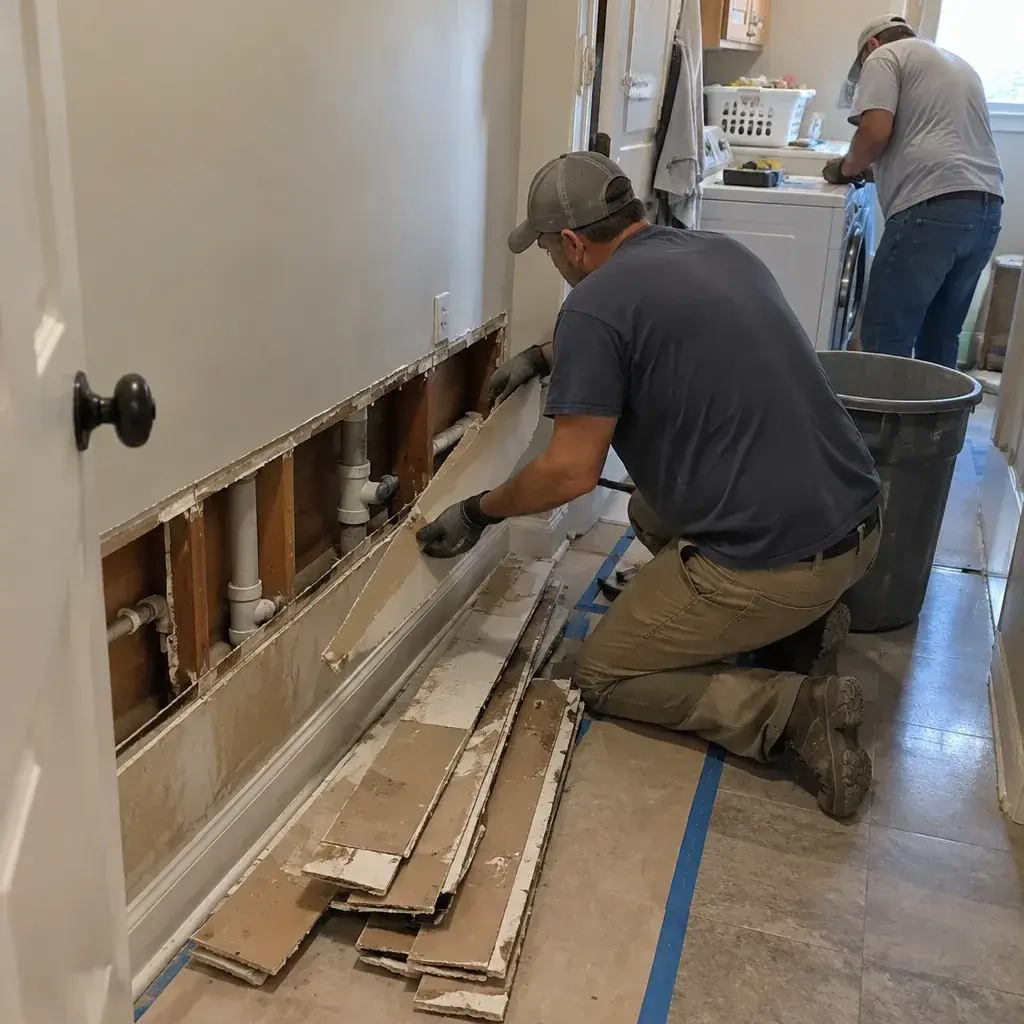
The plumber isolates the affected supply when its shutoff is safe to operate, then inspects the exposed pipe and confirms its markings, size, and intended use. For concealed damage, the affected area may need access opened. The condition of the break and nearby PVC determines how much pipe can be removed while leaving sound material for secure connections.
The failed piece is cut out and replaced with PVC pipe and fittings suited to the existing system. The plumber prepares and joins the connections using the specified method, then allows the joints to cure as directed. Nearby pipe supports are checked so the replacement does not pull against its new joints.
A wet ceiling can point to a concealed break, and finding it may require access before the pipe can be repaired. The plumbing work may still be a one-visit repair; ask about follow-up only if the inspection finds other sections that need monitoring.
WHEN A PIPE FIX ENDS AND CHECKUPS CONTINUE
| Leak Check |
How the Line Is Fixed |
|---|
| One break, spotted early | Compatible pipe replacement |
| Repeat seepage from an earlier pipe repair | safe water shutoff |
| Several compromised pipe sections, not one break | Damaged line replaced; water flow checked |
WATER LINE REPAIRIdaho DOPL provides plumbing permit guidance. Ask the plumbing professional how permit requirements apply to this repair and its jurisdiction. Keep an invoice that identifies the pipe material, section changed, fittings used, and leak check; those details can help a future plumber understand work near Kleiner Memorial Park.
Checking the Line Before Closing Up
Water escaping from a split can soak nearby drywall, flooring, insulation, and framing while the line remains supplied. The longer it runs, the farther moisture may spread from the visible break. Burst Pipe Repair addresses the plumbing line; extraction, drying, and rebuilding wet areas may require a separate provider.
Stay Clear of Electrical Hazards
From a dry, safe spot, you can note where water appeared, photograph visible pipe markings, and tell the plumber what the line serves if you know. Move people and belongings away from the wet area, especially if water is spreading. Do not cut or glue a pressure line, enter a wet electrical area, or cover a repair before it has been checked.
Keeping Clear of Wet Work Areas
Water around electrical outlets, appliances, or wiring can make the area unsafe. Keep clear of wet electrical equipment and do not enter a flooded space to reach a pipe or valve. If the shutoff is safely reachable from a dry place, it may limit further flow; otherwise, stay back and seek appropriate help. Plumbing repair does not include drying or rebuilding wet surfaces.
What Goes Into the Repair Cost?
A concealed line may require different access than an exposed one; request an estimate after the plumber locates the damaged section.The guide shown as $350–$1,300 covers locating and repairing the damaged supply pipe, with the amount shaped by pipe material, access, and how much must be replaced. It leaves out water extraction, drying, and rebuilding. For your Nampa home, the pros we connect you with can confirm any visit charge and the exact repair scope when you call.See pricing guide for complete cost ranges and what can change the final amount.