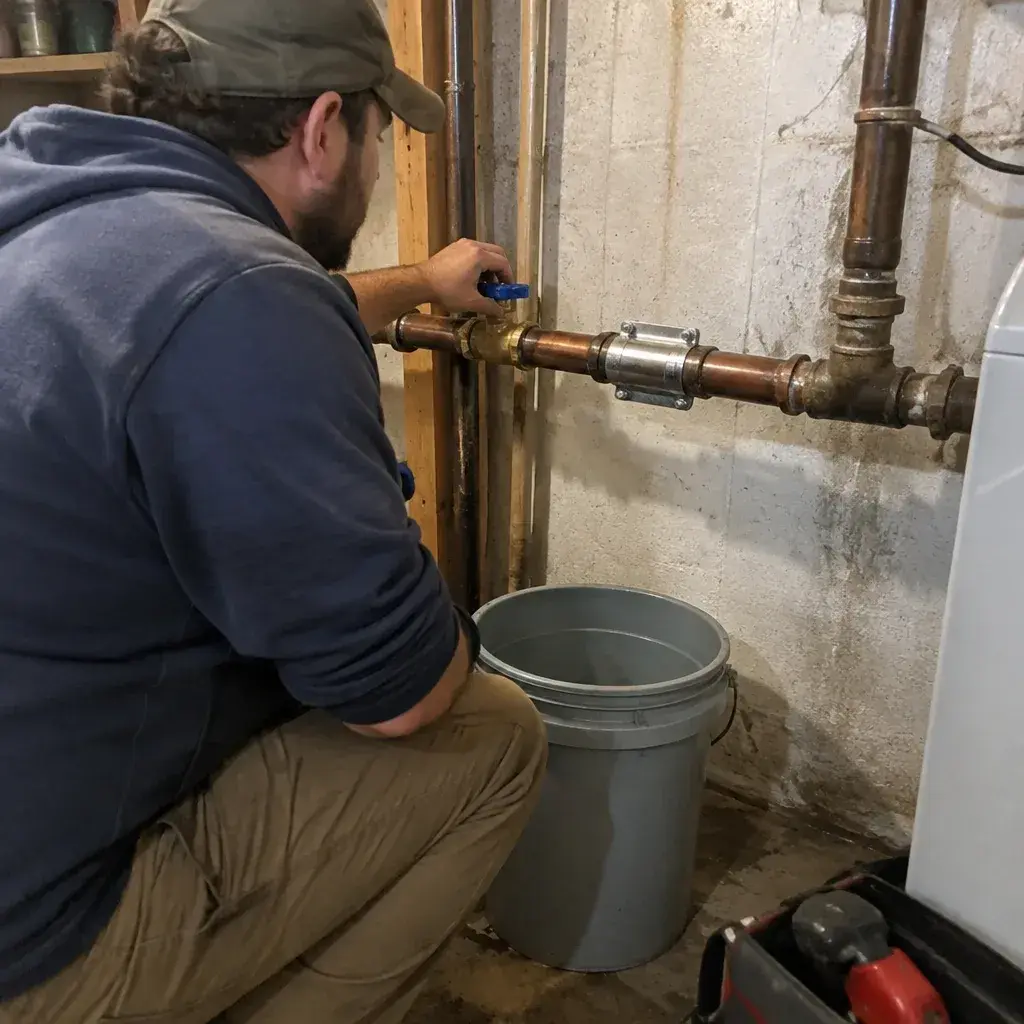
Nampa Pipe Repair Clamps near Lakeview Park and Mason Creek
A clamp may quiet a visible leak, but its seal depends on the pipe, damage, and the maker’s limits.
A repair clamp can sometimes slow a leak on an exposed pipe when its sealing surface sits over a small, localized opening. Treat that as temporary: pressure, pipe shape, or damage beyond the gasket can defeat the seal, so it does not establish a lasting repair.
Read the Leak from Its First Sign
A cold Nampa morning can turn a small mark on a visible water line into a steady drip by lunchtime. A split, spray, or wet patch around a pipe is a sign to follow, but it does not tell you whether a clamp can seal the damage. This page looks at what a repair clamp presses against, how pipe size and material affect the fit, and which signs suggest the damage needs a replacement section instead.
A burst pipe repair clamp usually has a rigid outer body, fasteners, and a sealing surface that presses against the pipe. Tightening the fasteners draws the body around the line, compressing the seal over a damaged spot. That pressure can slow or stop a leak when the clamp is designed for the pipe and the break. Designs vary, so the parts and limits listed by the manufacturer matter more than the clamp’s general appearance.
Start by noticing where the water appears: a bead at one point, a lengthwise split, or a spray that wets the area around the pipe. In Nampa, a visible leak on an exposed line gives you a clearer view of the damaged area than a stain appearing somewhere else. Water can travel along a pipe or surface, so the wettest spot may not mark the opening. A clamp needs to cover the actual damage, not just the first place you noticed moisture.
How a Clamp Meets the Pipe
Pipe material and outside diameter determine whether a water pipe clamp can sit evenly and seal. A product intended for one pipe type or size may not match another, even when both lines look similar. Check the manufacturer’s specifications for the pipe material, measured outside diameter, and damage type. In Nampa homes, the installed pipe is not established by location alone; the markings or a clear view of the exposed line are more useful than assumptions about the building.
The pressure rating is another limit to compare with the water line. A clamp that fits around the pipe may still be unsuitable if its rated conditions do not cover the line’s operating pressure. Look for the manufacturer’s stated pressure limits and installation conditions, including any restrictions on the length or shape of damage. A product description that only says “pipe repair” does not establish that it can seal a pressurized burst in your particular line.
Look at the surface around the leak as well as the opening itself. A seal needs an even contact area to press against; a jagged split, a deep gouge, or damage that continues past the clamp’s sealing surface can leave a path for water. If moisture is spreading from beneath the band or reappears after the line is under pressure, the clamp may not be holding. A dry outside edge alone does not prove the damaged pipe has a lasting repair.
When the Seal Is Temporary
In Nampa, winter cold can make a burst line a concern, but a clamp’s suitability still depends on the pipe and the break. Watch for a new bead of water, a growing wet area, or fresh dripping from an exposed section. If the leak is near electrical equipment or standing water, keep clear; only approach a shutoff if it is safe to reach and operate. A clamp does not make an unsafe area safe to enter.
A product’s instructions may limit where or how it can be used, and those conditions affect whether the seal can hold. Check whether the listed clamp covers the pipe’s material and diameter, the line’s pressure, and the kind of damage you can see. Do not treat a general-purpose label as proof of compatibility. Similar looking pipes can need different products, and a mismatch can leave water escaping at the edges of the seal.
What Continued Wetness Can Mean
A clamp is a poor match when the split is too long for its sealing area, damage reaches a joint, or the pipe is deformed where the seal must sit. In those cases, a compatible replacement section may be needed to remove the damaged length. The signs are in the pipe itself: a leak that extends beyond the clamp’s coverage, a seal that cannot sit evenly, or continued water escaping under pressure. A clamp cannot restore sound pipe beyond its contact area.
In Nampa, a clamp should be treated as temporary when it only limits water from a damaged section and the pipe has not had a compatible lasting repair. It can be useful as a stopgap on some accessible lines, but it does not resolve damage beyond its seal or confirm that the pipe is sound. If the leak persists, returns, or spreads, the damaged section may need replacement. The clamp manufacturer’s stated limits help define its intended use.
Check These Clamp Limits
- Match the clamp specifications to the pipe material and outside diameter; a wraparound fit alone does not establish compatibility.
- Check the rated pressure and damage limits, then confirm the sealing surface can cover the entire visible break.
- Continued leakage, a split beyond the seal, or damage at a joint can indicate that a replacement section is needed.
- Check that the gasket covers the leak and the shell matches the pipe’s outside diameter; an uneven fit can leave a path for water.
- Compare the clamp’s approved pipe material and pressure rating with the line; appearance alone cannot confirm a suitable match.
- Check the listed damage type and coverage; a long split, damaged connection, or broader break may need a replacement section.
Common Questions
Can a repair clamp seal a burst water pipe?
It can seal some leaks when its sealing surface fully covers the break and its specifications match the pipe material, outside diameter, pressure, and damage type. A Nampa homeowner should not assume a clamp fits because it wraps around the line. If the split extends beyond the seal or water continues escaping, the damaged section may need replacement.
When is a burst pipe clamp only a temporary fix?
A clamp is temporary when it slows or stops water for a short period but does not provide a lasting repair to the damaged line. That may be the case when the break is too large for the seal, the pipe is misshapen, or the product’s specifications do not match. In Nampa, check the manufacturer’s stated limits; persistent or returning leakage means the clamp is not holding.
Will one water pipe clamp fit any pipe?
Compare the product’s specifications with the pipe material, outside diameter, pressure rating, and the kind of damage. The clamp must cover the break with its sealing surface and meet the manufacturer’s installation conditions. A visible fit around the pipe alone is not enough. If the damage extends past the seal or lies at a joint, a replacement section may be needed.
Need a Lasting Seal?
Share the pipe material, outside diameter, clamp specifications, and leak location with the pros we connect you with to discuss whether a clamp is suitable.
Call +12084868147